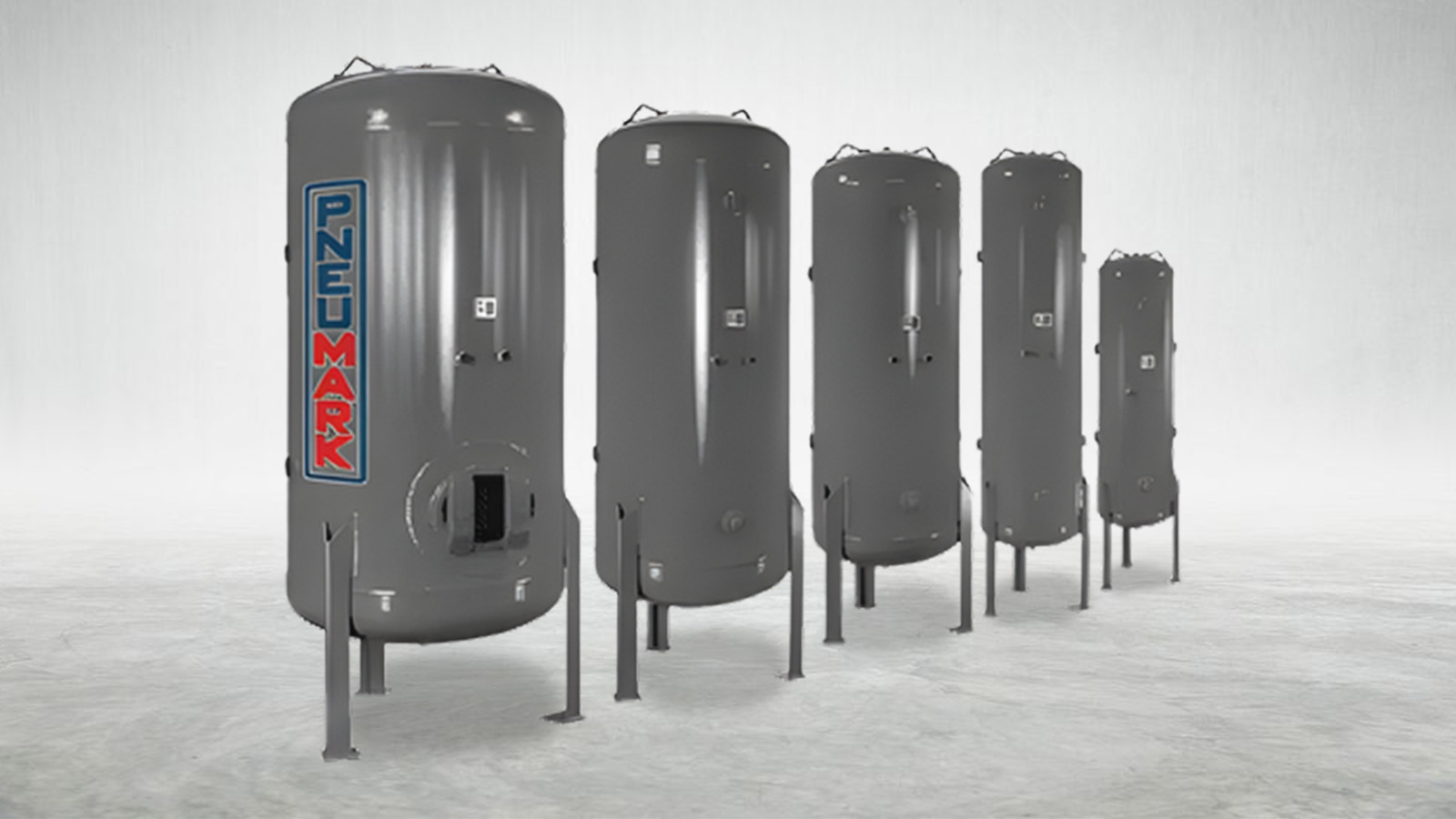
A compressed air system has many intricate units. While the compressor is the core component of the system, the receiver is integral to it as well. Also known as a pressure vessel or air receiver tank, it is used to store compressed air to meet demand at a manufacturing facility, industrial plant, or workshop.
By storing excess air for peak demand, an air receiver prevents downtime and keeps the pneumatic tools and equipment running. Here are the key reasons to invest in an air receiver for your compressed air system.
Downtimes are extremely frustrating for business owners. If your tools and equipment rely on compressed air to function, it is imperative to invest in air receivers.
By storing compressed air for future use, the receivers allow you to mitigate peak demand. When the demand for compressed air exceeds the capacity of your air compressor, the air receiver tank acts as a buffer, preventing pressure drop.
Moisture is a byproduct of air compression. When atmospheric air is compressed, the temperature increases. As the compressed air travels downstream, it cools, resulting in condensation.
The air receiver tank is the perfect place for the condensed liquid to settle and be drained with the help of drain valves. Draining moisture is important to prevent corrosion and internal damage.
If you have a peak season coming up or are working at a facility with a limited or unreliable energy supply, it makes sense to invest in an air receiver. It serves as a critical backup source of compressed air, keeping your pneumatic tools and equipment running efficiently.
Moreover, abrupt power failures stand to damage sensitive components. The emergency storage provided by the air receiver gives operators valuable time to shut down tools and equipment safely.
There are different types of air receivers, each with its own set of features and advantages. Continue reading to learn the types of air receivers, their features, and ideal use cases.
This receiver is placed between the compressor and the dryer. As the name suggests, a wet air receiver is designed to handle and store compressed air with moisture still present. It cools the air, allows condensation to settle, and eventually rids it through the drain valves.
Acting as the primary separator, wet air receivers make the job of air dryers easy by removing oil and moisture in bulk. These receivers do a great job of making the entire compressed air system energy and performance-efficient.
The primary difference between a wet and a dry air receiver is the placement. The dry air receiver is installed downstream of an air dryer. Designed to store dry, treated air, this air receiver plays an important role in pressure stabilisation and consistent supply.
While the job of eliminating the moisture doesn’t lie with dry air receivers, they do a great job of preventing moisture re-entry. For improved air quality, a dry air receiver is an important investment.
For larger manufacturing units, industrial facilities, and spacious workshops, horizontal air receivers are perfect. Since they occupy more horizontal space, these air receivers are ideal for limited vertical clearance.
Moreover, horizontal air receivers are perfect for mounting under compressors. The design facilitates more storage of compressed air, making it ideal for heavy-duty applications.
Setting benchmarks in the compressed air industry since 1988, SL Engineering is a name you can trust for all your compressed air requirements, including sourcing the best vertical air receivers.
Our home brand, Pneumark, features a wide range of air receivers specifically designed to suit conditions in Western Australia. You can rely on us to buy air receivers with a capacity between 150 and 5200 litres.
Moreover, expert guidance, enhanced customer service, and maintenance and installation services set us apart from the competition. Think SL Engineering, think reliability.
Investing in the right air receiver can make or break your compressed air system. SL Engineering in Perth, WA, is a one-stop destination for all your compressed air system requirements.