It is general knowledge that compressed air systems generate condensation. This is a result of atmospheric air being compressed and cooled. Here’s the simple physics behind it.
When compressed, the air temperature rises, and as it travels along the system, the temperature drops. As a result, the moisture in the air condenses, becomes water, and accumulates within the compressed air system.
If not cleared, this moisture causes internal corrosion, damages the air compressor components, and pneumatic equipment.
This is where compressed air dryers prove to be useful. The functioning of compressed air dryers depends on their specific type. Here are some common types of compressed air dryers.
Air dryers are generally fitted after the air compressor and before the receiver tank. There are different types of dryers. Continue reading to learn all about it.
This intentional condensation process allows water to be separated and drained before any damage to compressor components or pneumatic tools occurs. It is one of the simplest yet most reliable solutions to avoid condensation-induced corrosion.
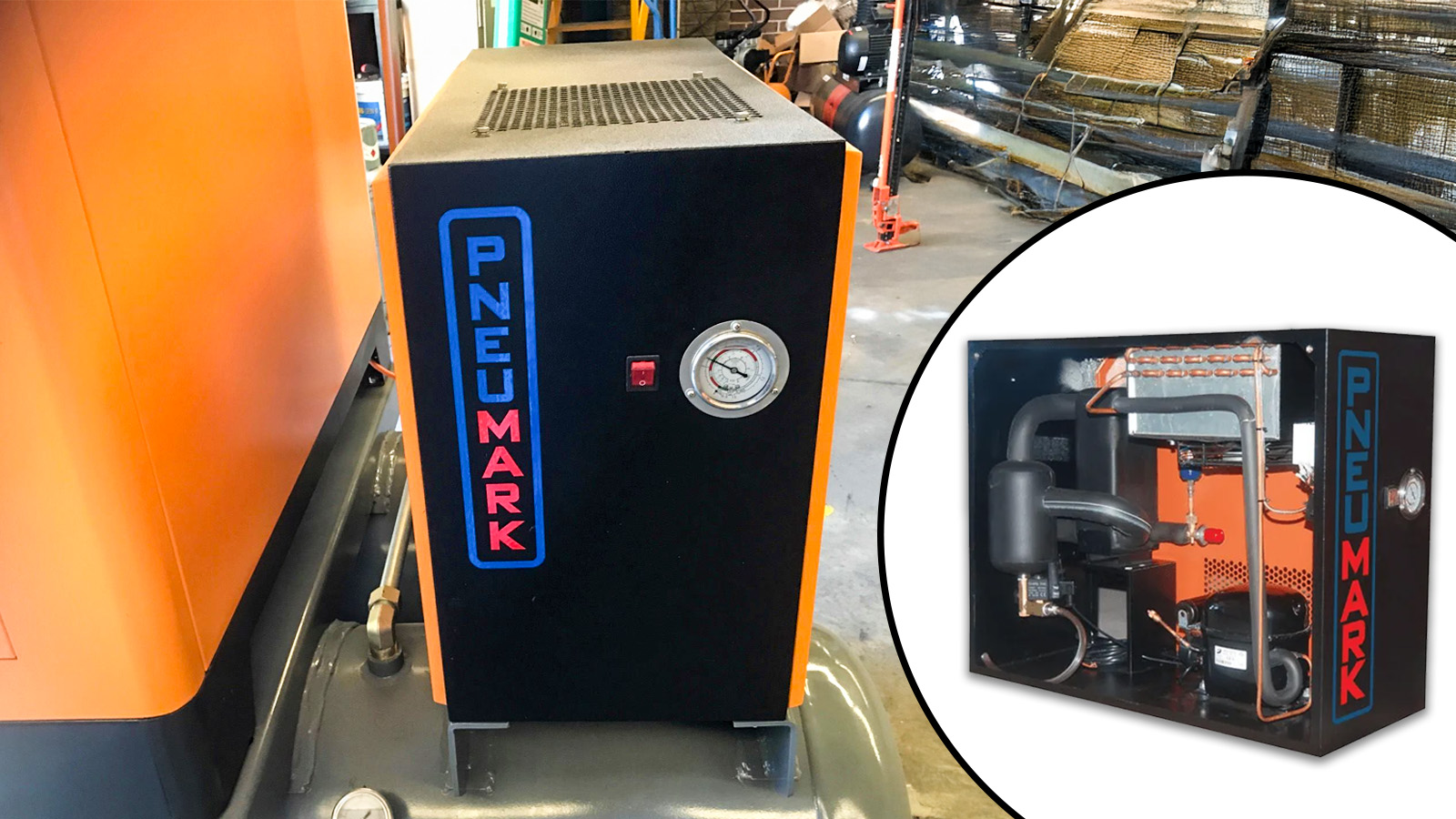
Refrigerated air dryers are cost-effective, demand minimal maintenance, and are perfect for uninterrupted operations. These air dryers are most commonly used at manufacturing plants, workshops, and automotive service centres.
When it comes to energy efficiency, desiccant is the best among the different types of dryers. This dryer significantly differs from a refrigerated one in how it dries the air. Desiccants are materials that can absorb moisture from their surroundings.
Activated alumina, silica gel and molecular sieves are the most common desiccants used in air dryers. These dryers can achieve extremely low dew points of –40°C to –70°C.
Desiccant air dryers are designed to deliver ultra-dry air, making them ideal for critical industrial processes. Investing in a desiccant air dryer is recommended for industrial processes such as pharmaceuticals, electronics, and food processing.
In membrane air dryers, hollow polymer fibres play an important role in separating moisture from air. These semi-permeable membranes effectively separate water vapour from compressed air.
Moisture passes through the membrane walls and is vented out as humid air. Clean, dry air flows through the outlet to power pneumatic tools and equipment. There are no moving parts in the membrane air dryers.
Hence, they demand minimal maintenance. Compact, lightweight, and no electricity required! While not best suited for heavy-duty industrial applications, these compressors are perfect for point-of-use applications, laboratories, medical equipment, and small compressed air systems.
Achieving a dew point of -6°C to 10°C, deliquescent air dryers are widely sought after for their ability to provide consistent dry air, without hassle. Deliquescence is a chemical process in which a solid substance absorbs moisture from the atmosphere until it dissolves.
A deliquescent air dryer uses salt tablets to absorb moisture from the air. These tablets dissolve as they absorb water.
The resultant liquid is drained from the system quite easily. Since their operation is straightforward, deliquescent air dryers are ideal for places with limited energy, such as construction sites, mining, and remote locations. The lower installation and maintenance costs are attractive features of deliquescent air dryers, making them popular.
Choosing the right air dryer is crucial for maximising the efficiency of compressed air systems and preventing premature damage to compressor components. Different types of dryers have specific features and advantages.
Choosing the right dryer depends on factors such as required dew point, application sensitivity, operating environment, and energy efficiency. SL Engineering in Perth, WA, is a one-stop destination for all your compressed air requirements.