An air compressor is one of the most important additions for businesses. A compressed air system is crucial for operating pneumatic tools, such as wrenches and hammers, material handling, supporting production lines, and other applications.
The working principle of a rotary screw compressor is simple. It relies on two interlocking helical screws to compress air and move it through the compression chamber. The constant rotary screw movement means the air intake and the compression never stop. Here are four important stages of rotary screw air compression.
Powered by crankshaft-driven pistons, reciprocating air compressors are always in high demand. The back-and-forth motion of the pistons ensures efficient air compression, enough to power pneumatic tools and equipment.
Piston air compressors come in two designs, single-stage and double-stage. It represents the number of times the air is compressed before being discharged. Double-stage piston air compressors are designed to provide higher pressure output than single-stage.
Investing in axial compressors for generic applications is usually overkill. The working principle of axial compressors is interesting. These compressors boast a shaft, simply called the compressor shaft, that’s crucial to the entire compression process.
Parallel to the shaft are usually a series of stationary and rotating blades. When the air passes through these blades, the force gradually multiplies. This facilitates the delivery of a large volume of air despite the unit being relatively compact.
The top-of-the-line compressors, centrifugal models, are ideal for large manufacturing units, refineries, and power plants. These premium compressors are oil-free and ensure a continuous, non-pulsating air supply 24×7.
The working principle of a centrifugal compressor is quite interesting. An impeller in the compressor draws in atmospheric air. It relies on a diffuser to convert kinetic energy into compressed air, ensuring a continuous air supply.
Buying the right air compressor type is crucial to ensure maximum efficiency. Considering factors such as airflow requirement, pressure levels, duty cycle, and energy efficiency is crucial. It won’t be an exaggeration to say that the reciprocating piston compressors and rotary screw compressors dominate the market for generic industrial applications.
If you are looking for a trusted supplier for your compressed air needs, look no further than SL Engineering in Perth, WA. Setting benchmarks in the compressed air industry since 1988, our brand name is synonymous with quality.
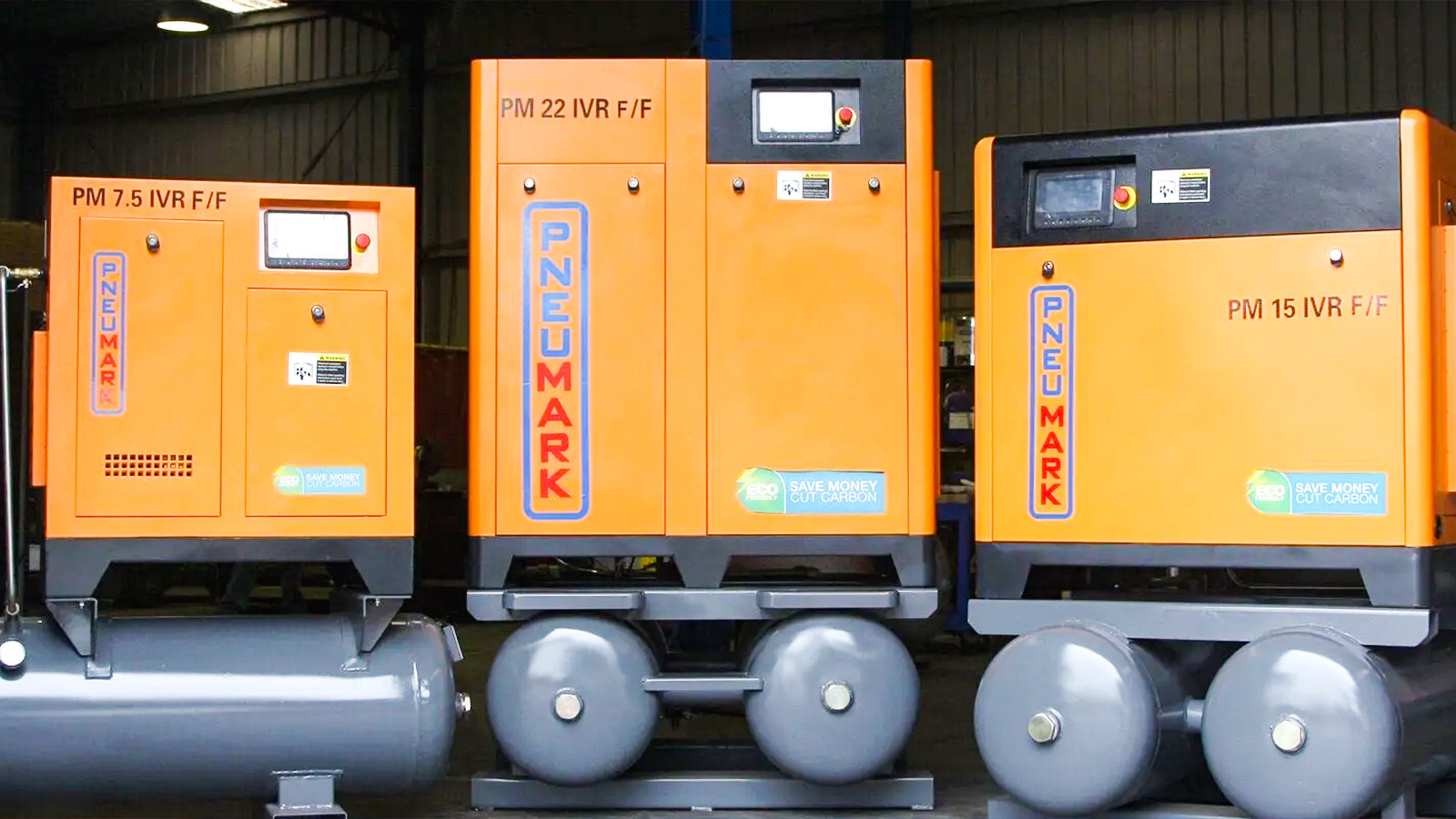
Our home brand, Pneumark, has an exceptional range of air compressors compliant with Australian design standards. Apart from piston and screw air compressor types, we also supply air receivers, air dryers, and digital tyre inflators.